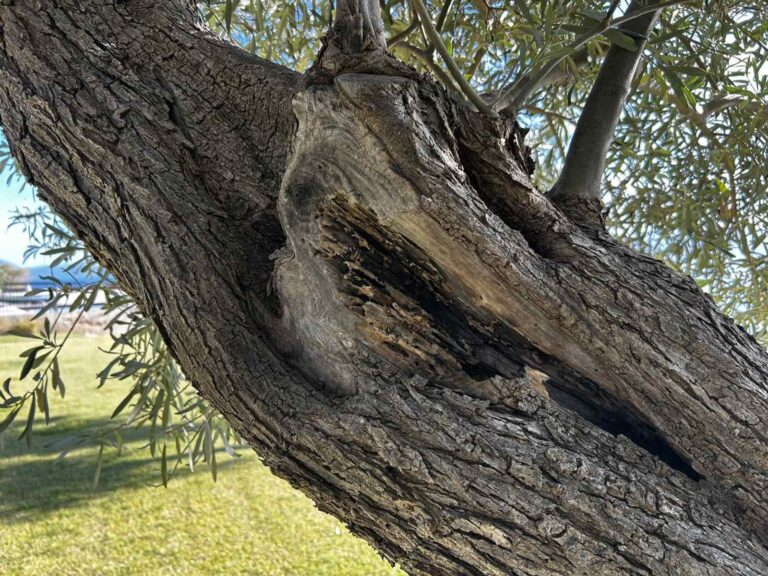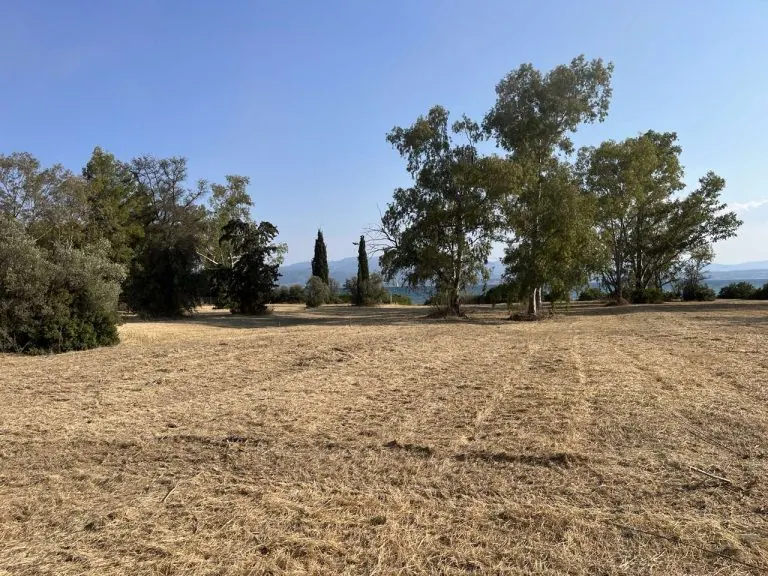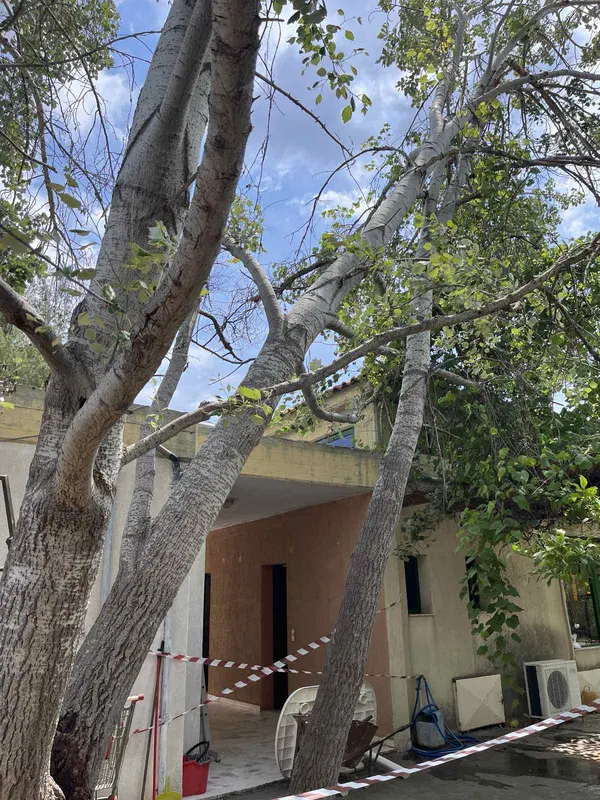

The olive is a tough tree and survives even poor pruning, but it will not crop well without good pruning. The key fact is that the olive fruits on the previous year’s shoots. Pruning aims to renew that growth every year and to let light into the tree.
When to prune an olive tree
The usual season is after the harvest and until spring, before flowering. In Evia and Attica that means roughly January to March or early April. Where frosts occur, wait until the cold has passed, because fresh cuts and new growth are vulnerable.
Prune in dry weather. Open wounds in rain and damp let in olive knot, a bacterial disease. So disinfect your tools between trees, especially if a tree has galls on its branches. Ask your agronomist whether a protective spray is needed after pruning.
Types of pruning
- Formative: in young olives, during the first years. It builds a strong frame with 3–4 main limbs and an open centre. Cut lightly so fruiting is not delayed.
- Fruiting: every year or every second year in mature trees. It thins the crown, removes dead, diseased and crossing branches, and keeps the height easy to harvest.
- Renewal: in old or neglected trees. Thick limbs are cut to force new growth. Do it gradually, over 2–3 years, so the crop is not lost.
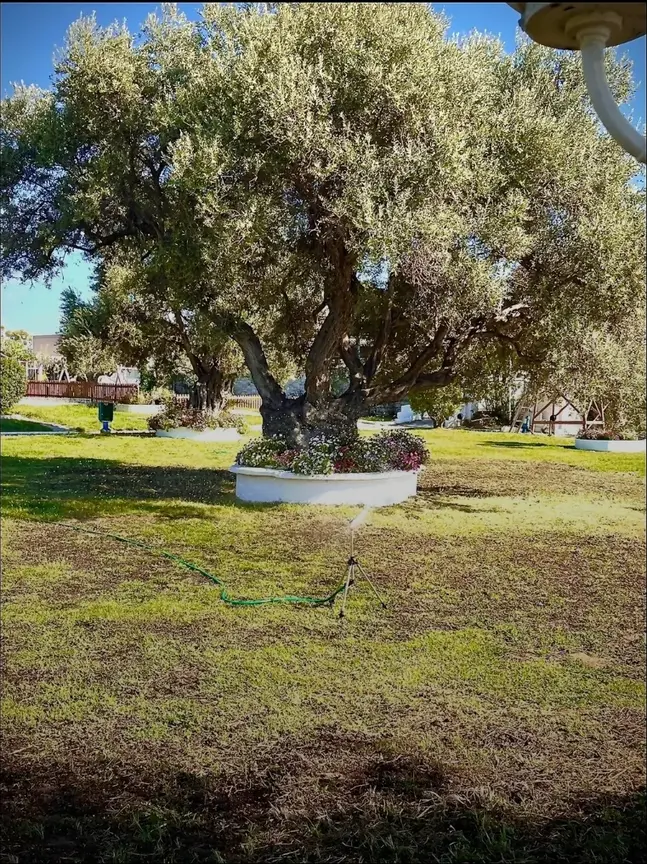
How much to cut
The simple rule: light pruning every year beats hard pruning every 3–4 years. Heavy pruning makes the tree put out lots of leafy growth instead of fruit, and it deepens the swing between good and bad years (alternate bearing). After a good pruning you should see light inside the crown, without the limbs being stripped bare.
What to remove first
- Dead, broken and diseased branches.
- Water shoots: vigorous upright shoots on the top and limbs that rarely fruit.
- Suckers at the base of the trunk.
- Crossing branches and branches growing into the centre.
- Where needed, the top, to reduce height.
Common mistakes
- Topping the tree flat, which brings a forest of water shoots the following year.
- Cuts that leave stubs, or that tear the bark. Cut cleanly, just outside the base of the branch.
- Pruning on rainy days or just before a frost.
- Leaving the prunings in the grove. Piles shelter wood-boring insects and become fuel in summer. Chip them or take them away. Thick wood makes excellent firewood.
A garden olive or a whole grove?
The principles are the same. With a garden olive, often ancient and ornamental, shape and safety matter more, e.g. branches over roofs or pools. In a grove what counts is yield and easy harvesting. If the trees are tall, pruning from a ladder is dangerous. That is work for arborists or proper equipment.
After pruning, think about protecting the fruit. Read our guide to the olive fruit fly and traps.
Need olive tree or grove pruning? See our service or ask for a free site visit.