
When choosing firewood, the type of wood matters, but how dry it is matters even more. A good species that is wet gives less heat, smokes and dirties the chimney. An average species, well seasoned, burns clean.
Wood types at a glance
- Oak: hard, dense wood. It burns slowly with steady heat and good embers, but takes a long time to dry.
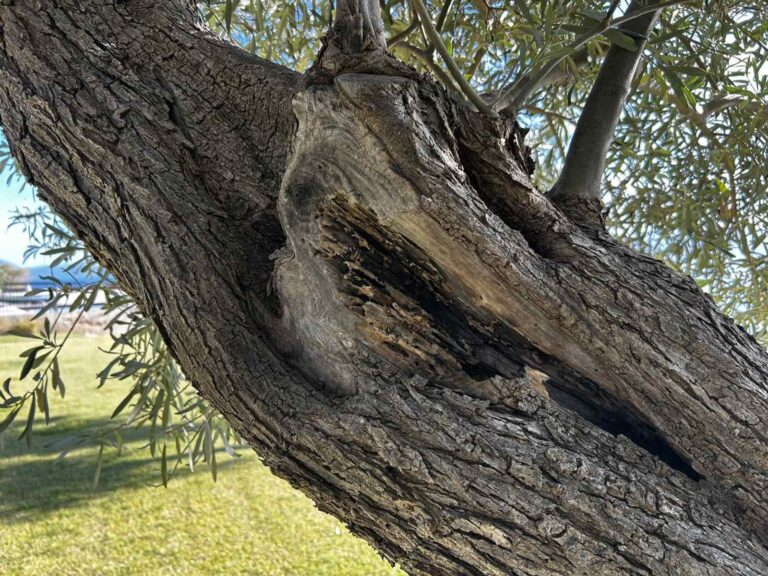
- Olive: one of the densest woods. It burns for a long time, gives strong heat and a pleasant scent. Ideal for fireplaces and wood stoves, and often comes from grove prunings.
- Beech: a hardwood with a clean burn and little smoke, good for stoves and ovens. If not well dried, it “pops” and throws sparks.
- Eucalyptus: medium hardness. It lights fast with a lively flame, good for quick heat and cooking, but burns out sooner.
- Pine: a softwood that lights easily, which makes it ideal kindling. It burns fast and its resin dirties the chimney, so it is not a good main fuel.
In general, dense hardwoods (olive, oak, beech) give more heat per cubic metre and last longer, while softwoods give a quick fire. Combining them (pine to light, hardwood to last) is usually best.


Why moisture matters so much
Freshly cut wood can be up to half water by weight. When it burns, much of the energy goes into boiling off that water instead of heating your home. Wet wood:
- gives less heat, so you need more of it for the same warmth;
- makes a lot of smoke and blackens the stove glass;
- leaves tar (creosote) in the chimney, which over time can catch fire.
For a good burn, firewood should have a moisture content below about 20%. A cheap wood moisture meter settles any doubt: measure on a freshly split face, not the outside. Without a meter, dry logs are lighter, have cracks at the ends and sound hollow when knocked together.
How to season and store firewood
- Split it. Split wood dries far faster than whole rounds.
- Stack it in a sunny, airy spot, raised off the ground (on pallets or beams).
- Cover only the top, not the sides, so moisture can escape.
- Give it time. Hardwoods usually need at least one summer, often more.
- Keep the stack away from the house walls. In summer it is fuel, and Greece’s mandatory plot-clearing rules target flammable materials next to buildings.
What to check when buying
- Unit: ask whether the price is per tonne or per cubic metre, and which cubic metre (stacked or loose). Wet wood weighs more, so per tonne you also pay for water.
- Moisture: ask for dry wood for immediate use, or buy early (spring–summer) and let it dry.
- Legal origin: firewood must come from legal felling. Buy from a professional and ask for a receipt or invoice.
- Length: match it to your fireplace or stove, e.g. 25, 33 or 50 cm.
Wood from your own trees
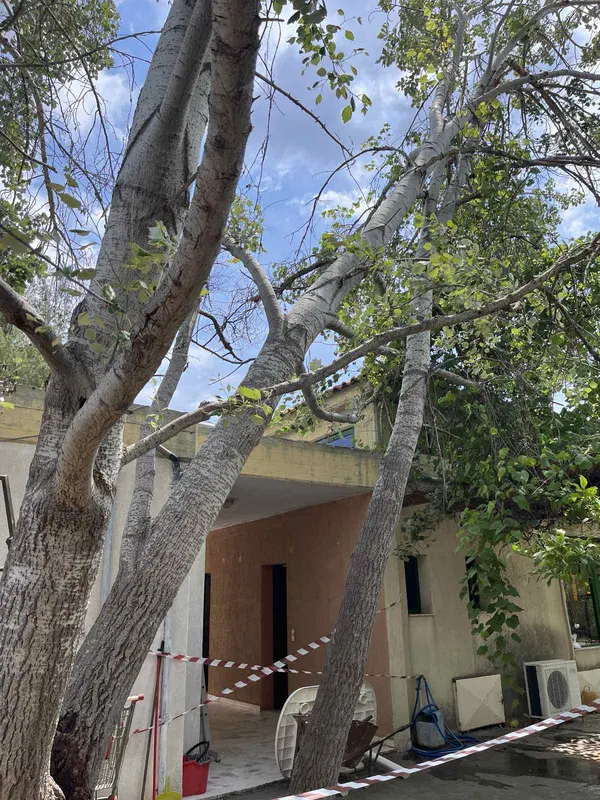
When a tree in your garden or grove is felled or pruned, the thick wood can stay with you. Cut it to length, split it and stack it now for next winter. Pine and eucalyptus from felling make good kindling, while olive and oak make the main fuel.
Need firewood? See our service or ask for a free site visit.