By Daniel May, certified arborist at Tree Dragon.
Fall and winter are pruning season. With most trees dormant, it’s the right time to shape them and remove problem branches. But every cut is a wound, and a careless one can let in fungi, scale insects and other pests. Here are five ways to make sure a prune leaves your tree healthier, not weaker.
1. Don’t cut into the trunk
Never cut flush with, or into, the trunk. Leaving a short piece of wood, about 10 cm, helps protect the tree against disease and pests. It also keeps water from running into the main trunk, where it causes decay and weakens the tree’s structure.
What it looks like in practice
We took these photos on trees we have recently taken on to restore. The cuts were made years before we arrived, and they show what a cut leaves behind over time, good or bad.
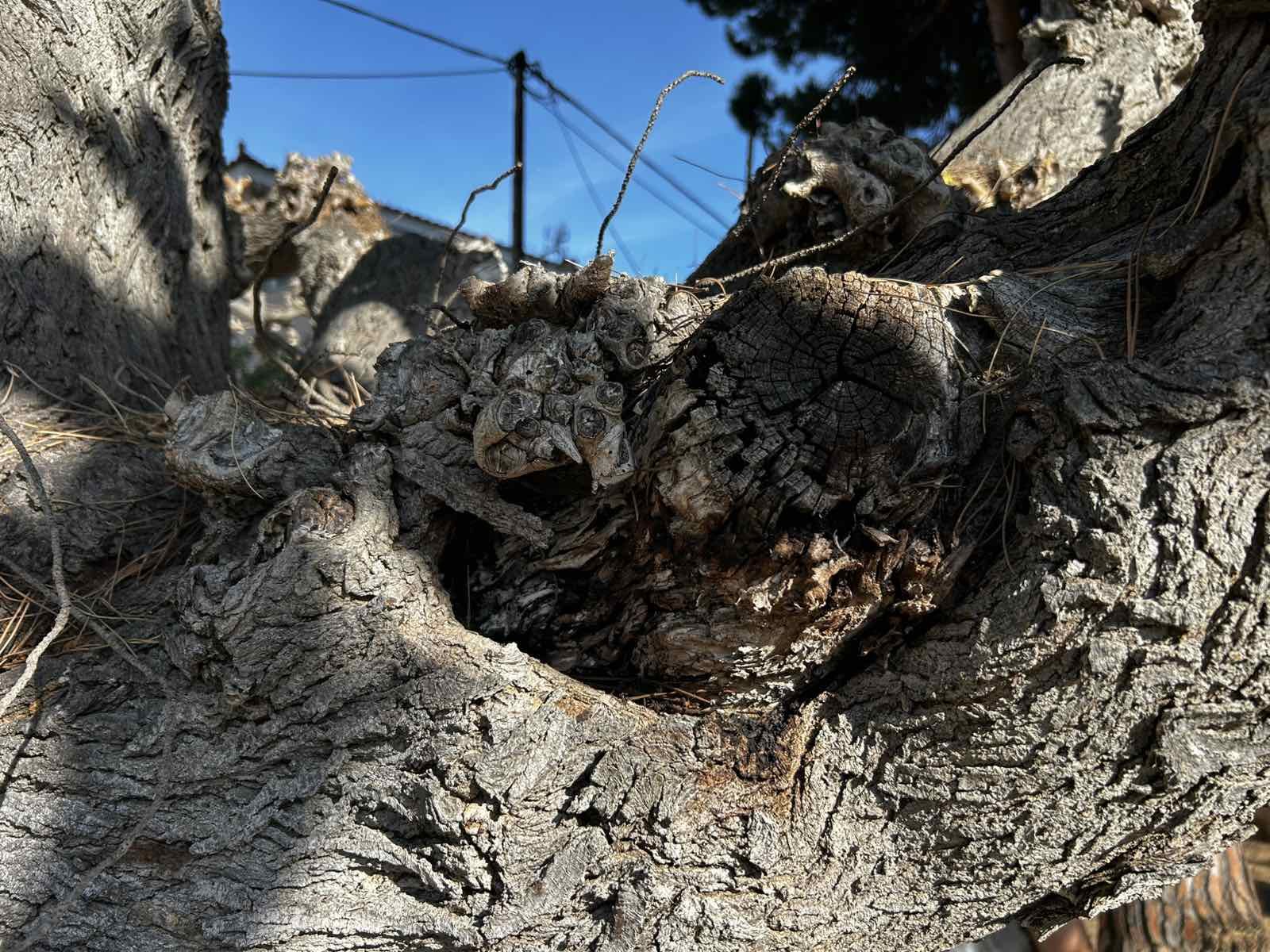
Mulberry, bad cut: an old pruning cut let water get into the wood. The result is rot where the branches meet.

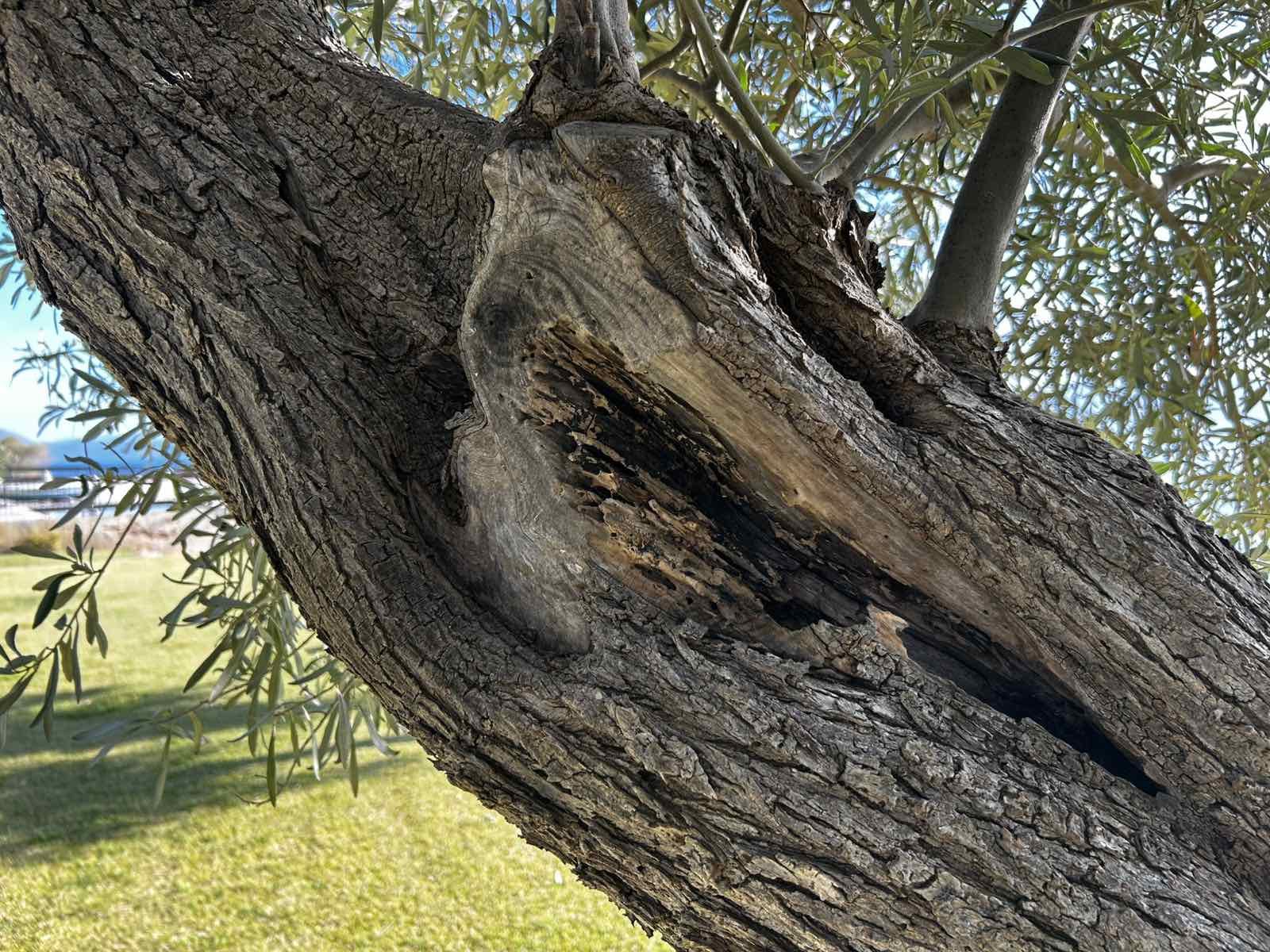
Olive, bad cut: a wrong cut years ago left the limb hollow and weaker. A branch like this breaks more easily in wind or snow.
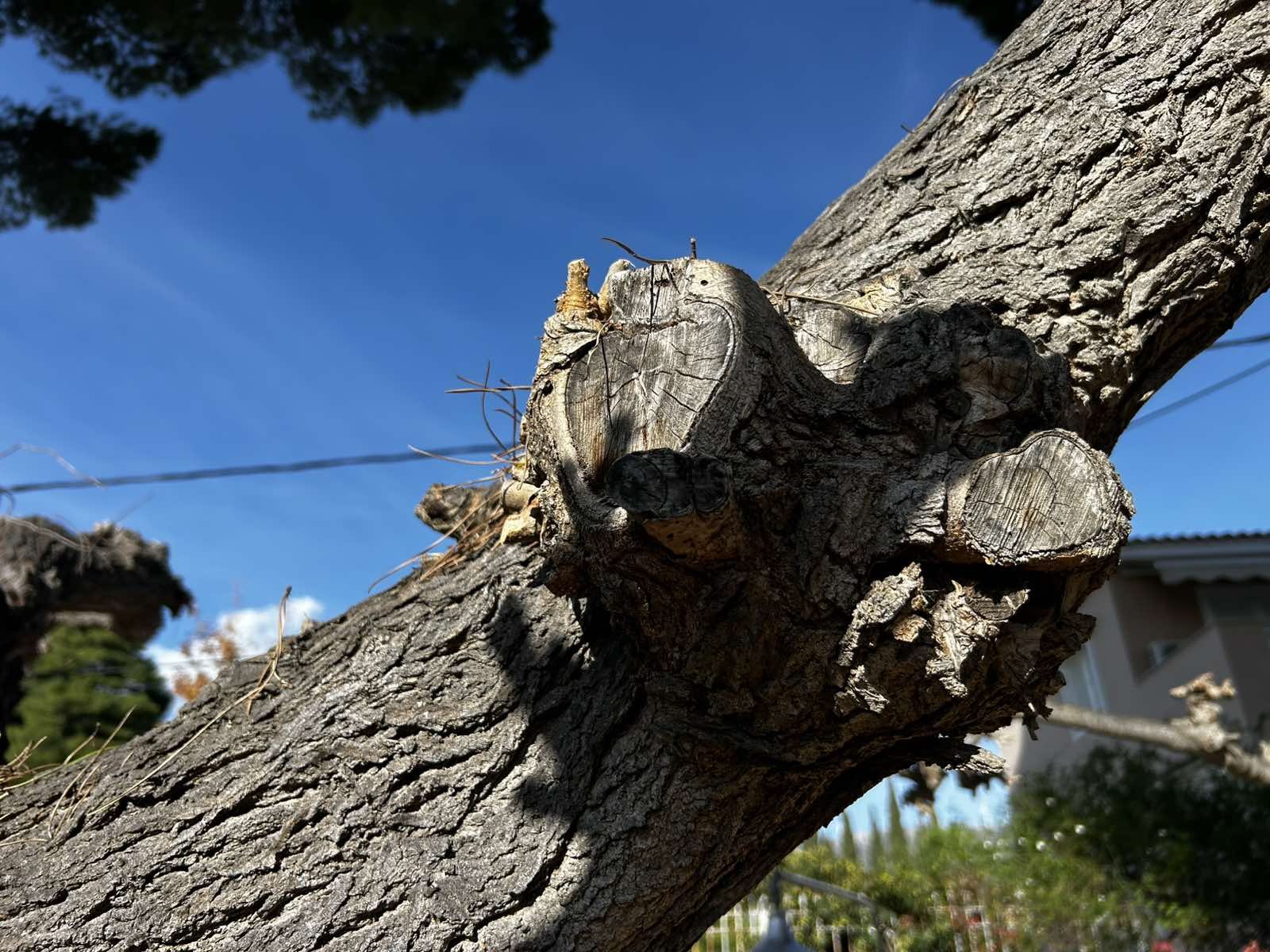
Mulberry, good cut: here the cut has healed properly. The wood has closed around it and water cannot get in.
2. Remove large branches in stages
Never take a large branch off in one cut. Its weight can make it tear away before the cut is finished, peeling bark down the trunk. We remove heavy limbs in three cuts:
- Cut off the outer, leafy part of the branch.
- Cut into the underside of the remaining wood, about a third of the way through. Then cut down from the top, just beyond the undercut, to take off its weight. The undercut stops the bark tearing as the wood falls.
- Make the final cut near the trunk, as described in tip 1.
3. Use pruning paste, not paint
Treated pruning pastes, sold at garden centres, can help stop fungal infections and keep boring insects out of fresh cuts. We don’t recommend paint: it seals moisture into the wood and causes rot.
4. Treat infestations before you prune
Many trees and plants are currently suffering from fungal and pest infestations. If a tree needs spraying or other treatment, do it before pruning, not after. While a tree is infested, avoid cuts that expose its inner wood: every pruning wound is an entry point.
5. Disinfect your tools
Clean your tools with disinfectant before and after pruning, and again each time you move on to another tree. It’s one of the simplest ways to stop infection spreading from tree to tree.
Need a hand this season?
If you’d like your trees pruned safely this fall or winter, get in touch with the Tree Dragon team. See also our guide to olive tree pruning.
Need careful tree pruning? See our service or ask for a free site visit.