
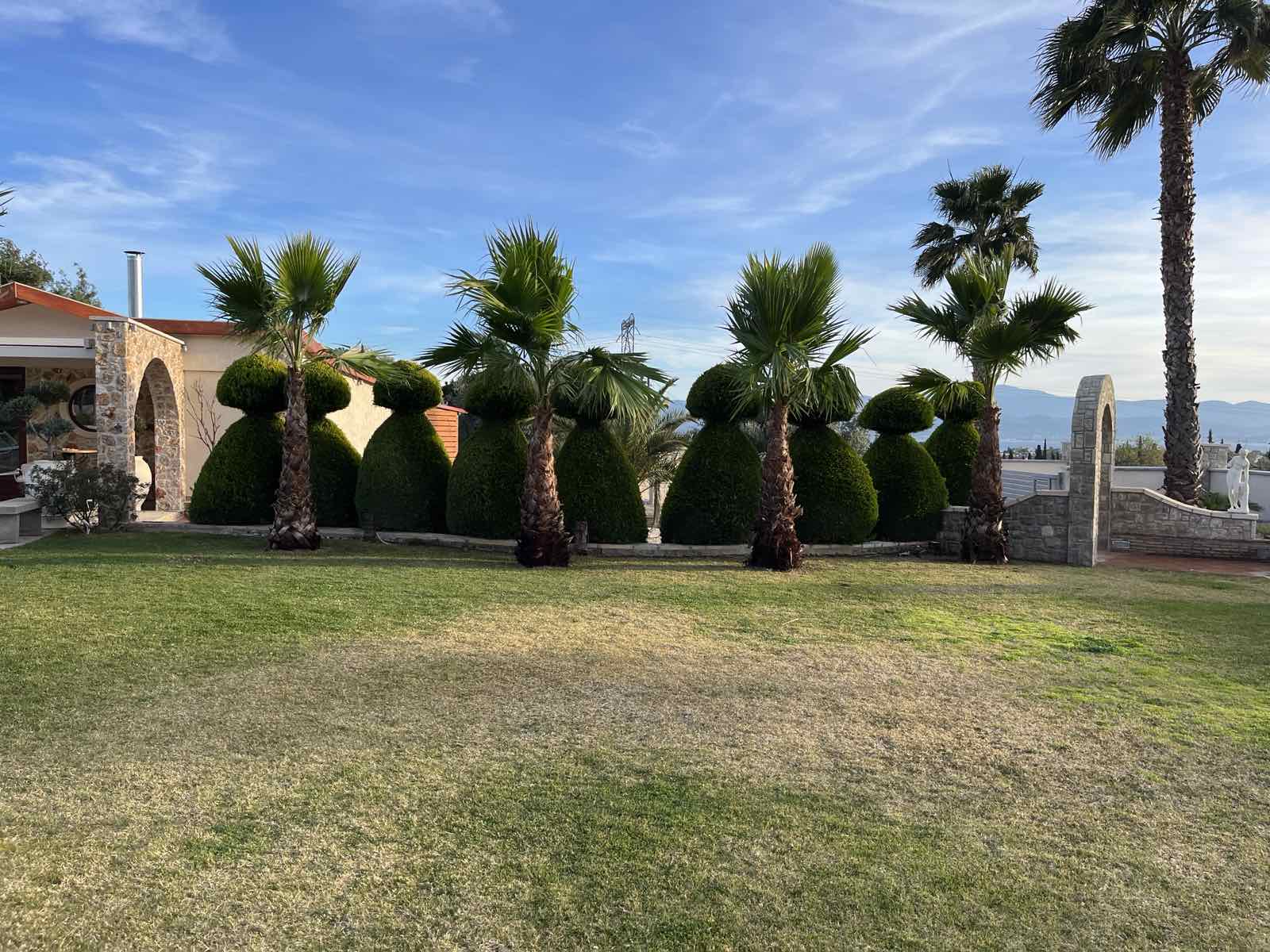
Correct pruning keeps a tree healthy, reduces the weight on its limbs and the risk of them snapping in the wind, and removes dry, flammable material before summer. We prune by climbing, so we can reach every part of the crown without injuring the tree.
What pruning includes
- Removing dead and dangerous branches over houses, yards, roads and cars.
- Crown thinning: lets light and air through, so the tree catches less wind.
- Crown lifting: we remove low branches for access, views or clearance from the roof.
- Reducing height or spread with correct cuts, without 'topping' the tree.
- Formative pruning of young trees, for a good structure from the start.
Palm cleaning and pruning
Palms need regular cleaning of dry fronds, flower stalks and fruit. Dry fronds are heavy, fall without warning and catch fire easily. While cleaning, we also check for signs of the red palm weevil, which can kill a palm within a few months. We do not cut green, healthy fronds beyond what is needed, as that weakens the plant.
When we prune
Most trees are best pruned at the end of winter, before new growth begins. In summer we avoid heavy pruning, apart from dead or dangerous branches. Palms are usually cleaned in spring and summer, and olive trees after the harvest (see olive tree pruning). More in our seasonal tree care guide.
Why we climb
Our climbers are certified by ENAERITIS. Rope access reaches trees where no lift can go, in gardens, on slopes and in courtyards, without trampling lawns and flower beds. Branches are lowered on ropes and the site is left clean.